
When the Fear of Losing a Child Gets in the Way of Loving Them
Why some parents who have lost a child before find it hard to feel close to the next one, and how therapy can help them bring the wall down.
"I know I'm doing everything right. I just don't feel it."
I hear versions of this more often than you might think, mostly from mums and sometimes from dads. They feed, change, bath and settle their baby. They do it well. Yet inside there is a flatness, a doubt, a sense that something between them and their child isn't quite there. Then comes the worst thought of all: maybe my baby doesn't love me.
Many of these parents have something in common. They have lost a child before. That might be a child of their own, or a child in their family they cared for, taken into care when things fell apart. Now they have a new baby, and the professionals are watching closely again.
Over time I've come to see what's happening here in a different way. I call it love that's scared.
We don't attach to what we think we're going to lose
Your brain has a simple rule for staying safe: if something hurt you badly once, watch out for it happening again. When a parent has lived through a child being removed, the pain of that loss doesn't just sit in the past. It sits in the body and the nervous system, waiting.
So when a new baby arrives, especially while social services are involved, part of the mind starts bracing for the same ending. Quietly, and usually without the parent choosing it, that part puts up a wall. The logic goes something like: "If I don't let myself love this one completely, it won't destroy me when they take them."
Researchers who study pregnancy after loss have a name for something similar: emotional cushioning, where parents hold back from bonding to protect themselves from more grief. The wall isn't a lack of love. It's love protecting itself.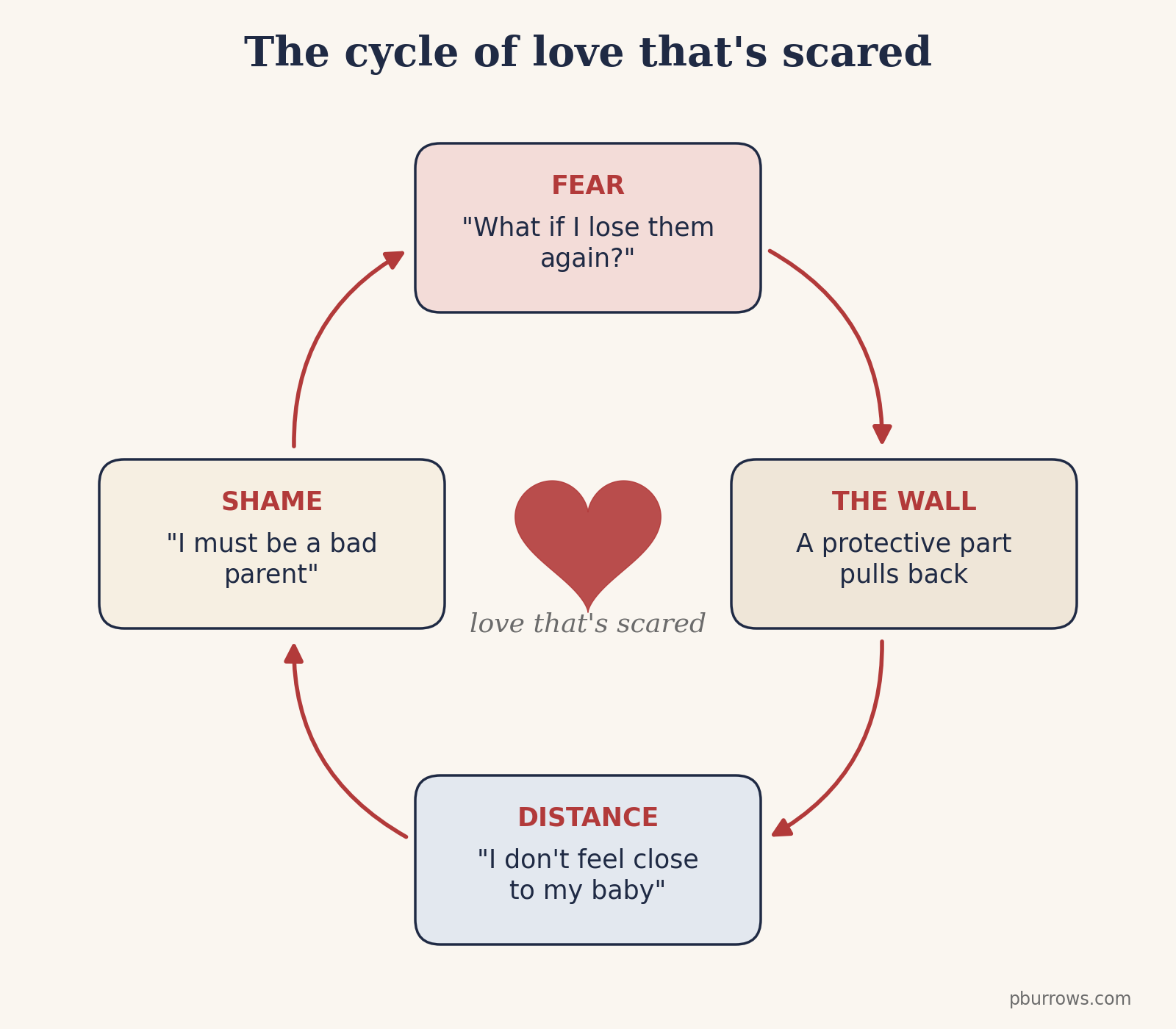
How the cycle keeps itself going
The trouble is that the wall feeds itself:
- Fear: "What if I lose them again?"
- The wall: a protective part pulls back, or tries to be the "perfect" parent.
- Distance: the parent feels disconnected, and reads the baby's ordinary wriggles and looking away as rejection.
- Shame: "I must be a bad parent." That makes the fear stronger, and round it goes.
The important thing to see is that the barrier is in the parent, not the baby. Babies wriggle, look away and cry because they're babies. A baby isn't withholding love. But when you're looking through shame, everything looks like evidence against you.
Meeting the parts that hold back
In my work I use a parts-based approach (Internal Family Systems, or IFS). The idea is that we all have different "parts" of us, often younger versions, each trying to protect us in its own way. With love that's scared, I often meet:
- The doubting part: "Am I doing it right? Does my baby even love me?"
- The overwhelmed part: "I can't do this, please," when the baby is screaming and everything is happening at once.
- The critical part: "Maybe they'd be better off with someone else." This one is hard to hear. It is usually replaying what happened last time, not telling the truth about now.
None of these parts are bad. They're all trying to protect you. The aim isn't to get rid of them. It's to get to know them, understand what they're afraid of, and help them feel safe enough to step back a little. One of the most useful questions I ask is: "What is that part afraid would happen if you let yourself love your baby completely?" The answer is almost always about loss.
When your head knows but your heart doesn't
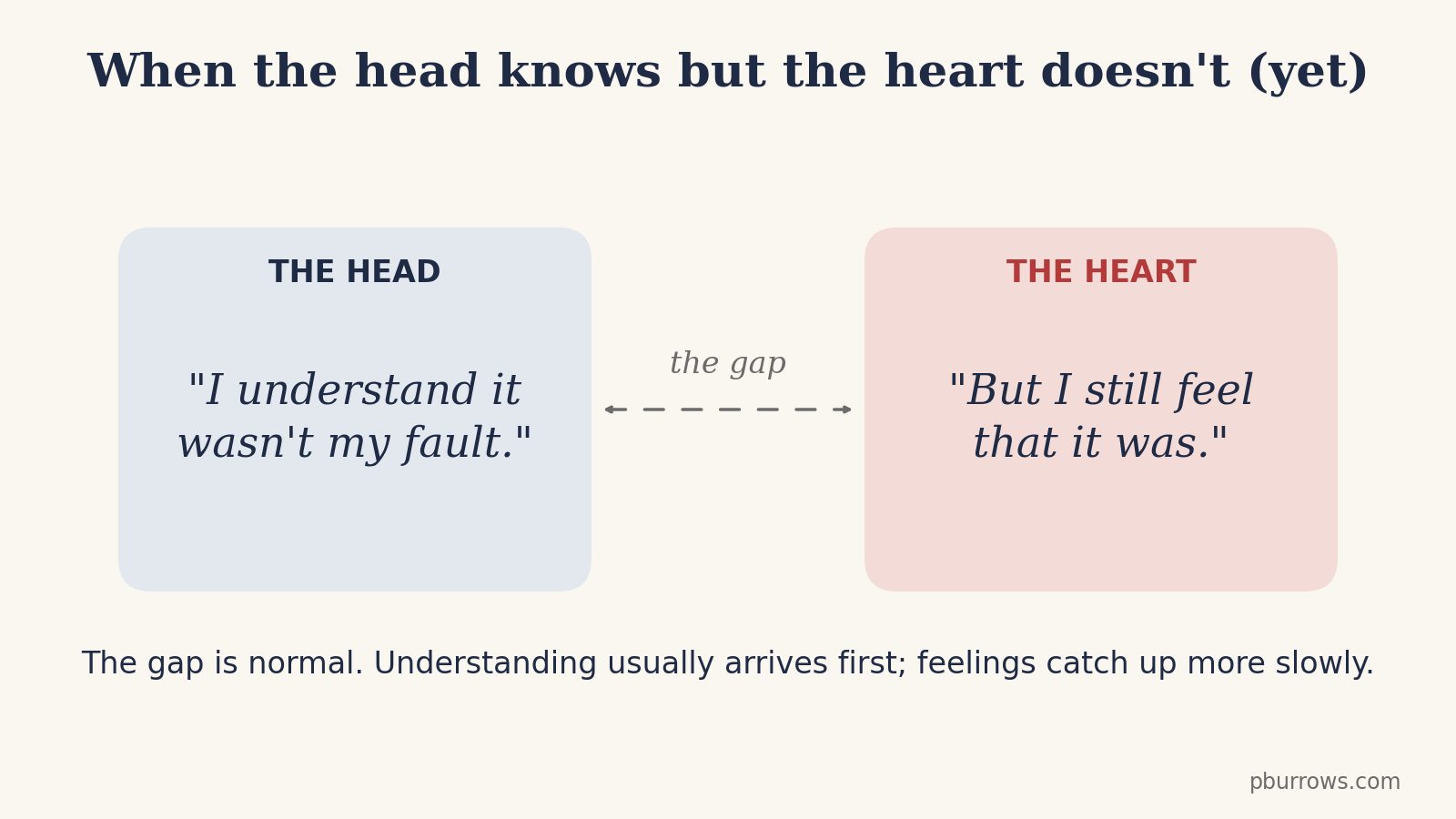
Many parents tell me they understand that what happened before wasn't their fault, but they still feel that it was. That isn't a failure of therapy or of willpower. Understanding usually arrives first, and feelings take longer to catch up.
It also helps to separate responsibility from fault. You can take responsibility for being part of something without it having been your fault. Holding both of those at once is hard, but it's where healing starts.
Bringing the wall down, one brick at a time
Recognising the cycle is the first step, because once you can see it you have a chance to change it. When the wall goes up, try this: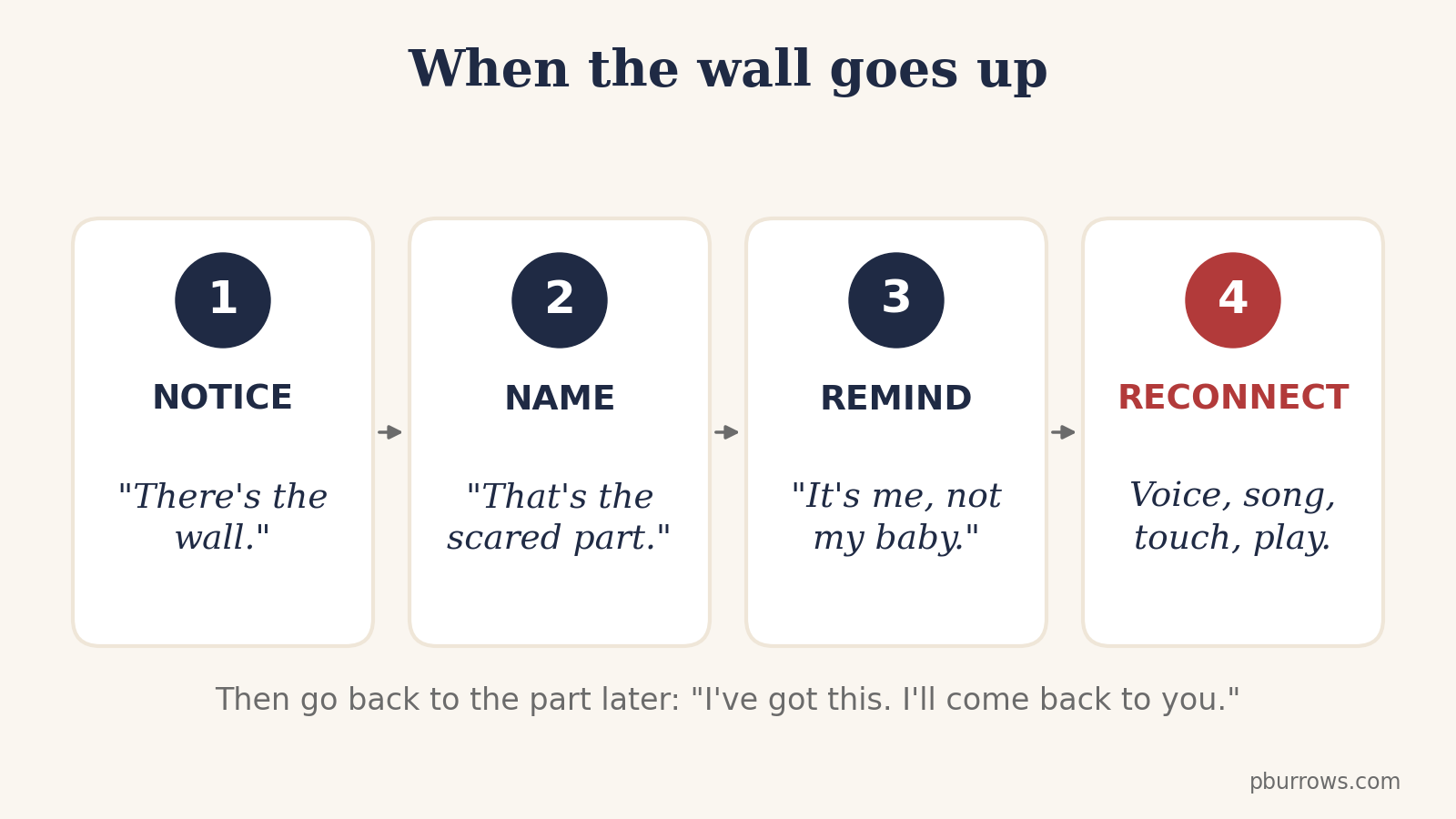
You will still have hard moments. The parts won't vanish. But each time you notice the wall and come back to your baby anyway, the scared part learns that it's safe to let you be close.
A different way to see it
If you recognise yourself in this, please hear one thing above everything else:
People don't protect themselves from losing something they don't love. The distance you feel may be love that's scared.
The same pattern shows up in adult relationships too: we push away the people we're most frightened of losing. Once you can see it, you can start to work with it.
If any of this sounds familiar, whether you're a parent working with children's services or someone who keeps finding yourself pulling away from the people you love, you don't have to work it out alone. If you're already working with a team, tell them how you're feeling. Being honest about the wall is a strength, not a risk.
If I can help, please get in touch.
The examples in this post are drawn from patterns I see across my practice. They don't describe any individual client.