
Finding Steadiness: When the Internal World Gets Loud
A reflection on an IFS-informed therapy session
One of the things I find most striking in this work is how external events — ones that seem, on the surface, to have no direct bearing on a person's life — can still set off a storm internally. This session was a good example of that.
My client, a mother in recovery who I'll call Sarah, came in carrying news she hadn't quite settled with yet. Her children's father and his partner are expecting a baby. Nothing about Sarah's day-to-day life changes because of this. And yet.
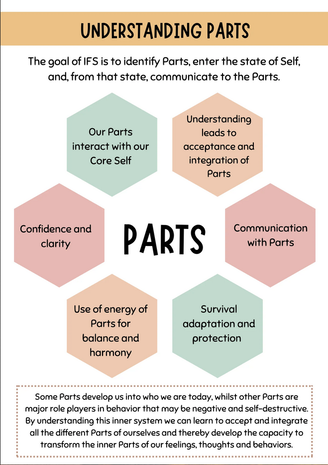
She described a cluster of feelings she could already sense stirring — discomfort, something competitive, a fear of being sidelined, of attention shifting away. In IFS terms, we recognised these as protective parts: a manager keeping a watchful eye on the family landscape, and a more reactive part underneath, carrying fears about being forgotten or replaced. Further in, there were older, quieter parts — exiles linked to a childhood where she hadn't always felt she was enough, where help hadn't always been available when she needed it.
What struck me was Sarah's capacity to hold all of this without being swept away by it. She could name the parts. She could see their logic. And she could do so with enough Self-energy that we weren't just firefighting — we were actually exploring.
A moment at the sewing table
Sarah described a moment from the week that I keep returning to. She was sewing with her daughter, who became frustrated and upset. Sarah recognised something in that frustration — it echoed her own childhood experiences of being overwhelmed and not being helped through it. And instead of shutting the moment down, or walking away, or telling her daughter to stop being silly, she stayed.
She offered encouragement. She used humour. She kept going with the activity, and helped her daughter regulate through it.
This is what Self-led parenting looks like in practice. Not perfect parenting — but present parenting. Parenting that says: I see you're struggling, and I'm not going to leave you in it. Sarah is consciously offering her daughter something different from what she received. She's already noticing places where her daughter may be developing protective parts of her own — a reluctance to ask for help, perhaps — and she's motivated to respond differently.
Recovery, comparison, and finding ground
Sarah's recovery continues to be a stabilising force in her life. She described her NA group as something that matters, that holds her. But groups are living things, and when new members arrive — particularly women — she notices parts of her that flicker with comparison and insecurity. A fear of losing her footing, her place.
And yet, alongside this, something new is emerging. Sarah has begun supporting a newer member she met at a different meeting. She's becoming someone others can lean on. This isn't a small thing. It speaks to a growing steadiness — the ability to hold her own discomfort while being present for someone else.
The question of home
Sarah is living in a foster placement while her flat undergoes decoration. She described the experience with honesty: the discomfort, the sense of confinement, the tension between appreciating the support and longing for her own space. Firefighter parts have been active — scrolling, smoking, restlessness — all familiar ways of managing the itch of emotional under-stimulation.
The flat will be ready next month. And while she feels nervous — particularly about being alone again — she also knows she's different now. The home she's returning to won't just look different. She will.
Clinical reflection
What I find most significant in work like this is the shift from being inside the parts to being with them. Sarah is increasingly able to notice her internal states, trace them to their origins, and choose a response rather than react automatically. That's not a small thing. That's the work.
The protective system remains active — around rejection, uncertainty, comparison, and independence. That's to be expected. These parts have been doing their job for a long time. But there is more Self present now: in her parenting, in her recovery engagement, in the way she reflects on her own experience.
The groundwork is being laid. And she's doing it steadily.